
Free returns mean the customer sends an item back at no charge, and the store pays the carrier. For a small online store they are a trade: more buyer confidence against a real cost on every return. Whether they pay off depends on your margin and your return rate.
Shoppers care about them. The National Retail Federation (NRF) found that 82% of consumers call free returns a major consideration when they buy (NRF, 2025). The same report found that retailers charge for returns to cover processing and carrier costs.
This guide puts numbers on the cost, says who should offer free returns and shows four ways to cap the bill. It ends with a free return shipping rule in WPReturns Pro 1.0.0, which we make. We read its docs and rule code in November 2026 for this guide.
What Do Free Returns Cost a Small Store?
A free return costs the store the return label, the time to open and check the parcel, and any item it cannot sell again. The label is usually the biggest part. A $40 order can cost $13 to take back before any stock is lost.
Return shipping cost depends on weight and carrier more than on price. A light t-shirt and a bag of pet food have the same $40 price and very different labels. Price your own return before you decide.
Here is one example. Say a label costs $9 and a packing station spends $4 of staff time on each return. Three policies split that cost in three ways.
| What one $40 return costs the store under three policies | Customer paysfull label | Flat fee$5 off the refund | Free returnstore pays |
|---|---|---|---|
| Label cost | $9 | $9 | $9 |
| Paid by the customer | $9 | $5 | $0 |
| Handling time | $4 | $4 | $4 |
| Cost to the store | $4 | $8 | $13 |
Notice what moves the total. The label is the same in every column, and only the share the customer pays changes. That share is the lever you control.
Multiply the last row by your return count. If 40 orders a month come back, free returns cost $520 in this example. Charging the full label costs $160.
Do the same sum for an order with two items. Most stores find the label is the same, and handling grows only a little.
Note: Time your packing station for one week. Handling is the number most stores guess, and a guess here makes the whole policy wrong.
Do Customers Really Expect Free Returns?
Yes, most shoppers do. In the NRF 2025 report 82% called free returns a major consideration when they buy online this year (NRF, 2025). Another 76% were more likely to choose a return option that gives an instant refund or exchange.
The same report found that about 71% of shoppers are less likely to shop with a retailer again after a poor returns experience. That is the case for making returns easy even when you charge for them.
Return rates matter here. NRF estimates that 19.3% of online sales are returned in 2025 (NRF, 2025). An online-only store should plan for about one order in five to come back.
Read these numbers with care. They come from a survey of mostly large retailers and their shoppers. A small store with loyal repeat buyers can have different returns behavior.
Who Should Offer Free Returns?
Offer free returns when your margin absorbs the label and handling, your return rate is steady and the policy helps you win sales against rivals. Skip them when margins are thin, items are heavy or your category returns a lot. Test a capped version first.
Free returns tend to fit stores that sell:
- Products with a margin above the cost of a return label and handling.
- Items that go straight back on the shelf.
- A category where rivals already offer free returns and shoppers compare.
They fit worse in these cases:
- Heavy or bulky goods with a label that costs close to the product price.
- Low-priced items. A keep it refund is cheaper there, and our returnless refund guide covers that choice.
- Apparel and other categories where fit drives most returns.
Check the numbers before you copy a big retailer. Amazon-sized volume buys cheap labels, and a small store pays full carrier rates. Quote a label for your heaviest product and your lightest one.
Nobody can tell you whether free returns will lift sales enough to pay for themselves. Store owners who test the policy on one product line first learn this from their own orders.
What Are the Risks of Free Returns?
The main risks are cost and abuse. Every free return costs a label, and free postage can tempt customers to order extra to try. A free policy needs a guard because NRF found that 9% of all returns are fraudulent.
A second source puts preventable returns fraud and abuse at 14.2% of $706 billion in returns (Appriss Retail, 2026). Neither figure is about free returns alone. They show what happens when returns are easy and unchecked.
A free policy also attracts wardrobing, where a customer wears an item once and sends it back. Condition checks on each request catch some of it.
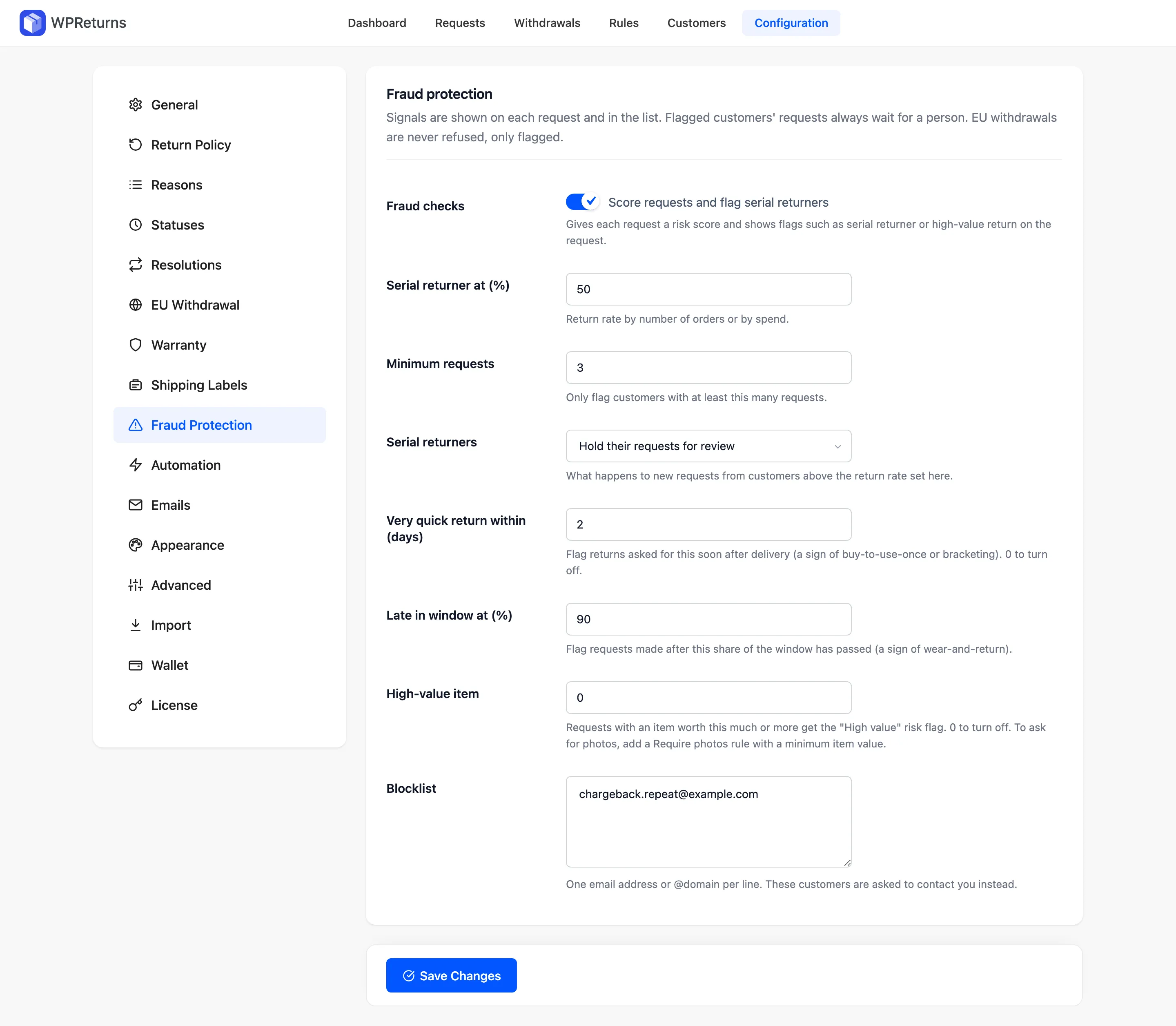
Our return fraud guide walks through the common patterns. Three guards fit a free policy:
- A minimum order total for free shipping.
- A check on repeat returners before you approve a free label.
- A clear reason list that shows which products drive the cost.
WPReturns > Configuration > Fraud Protection
4 Ways to Cap the Cost of Free Returns
You do not have to pick between free for everyone and free for nobody. Four middle paths keep the selling point and shrink the bill. They are free above an order total, free for exchanges and credit, a flat fee and keep it refunds.
The same rule set in WPReturns Pro handles all four. Staff do not decide case by case.
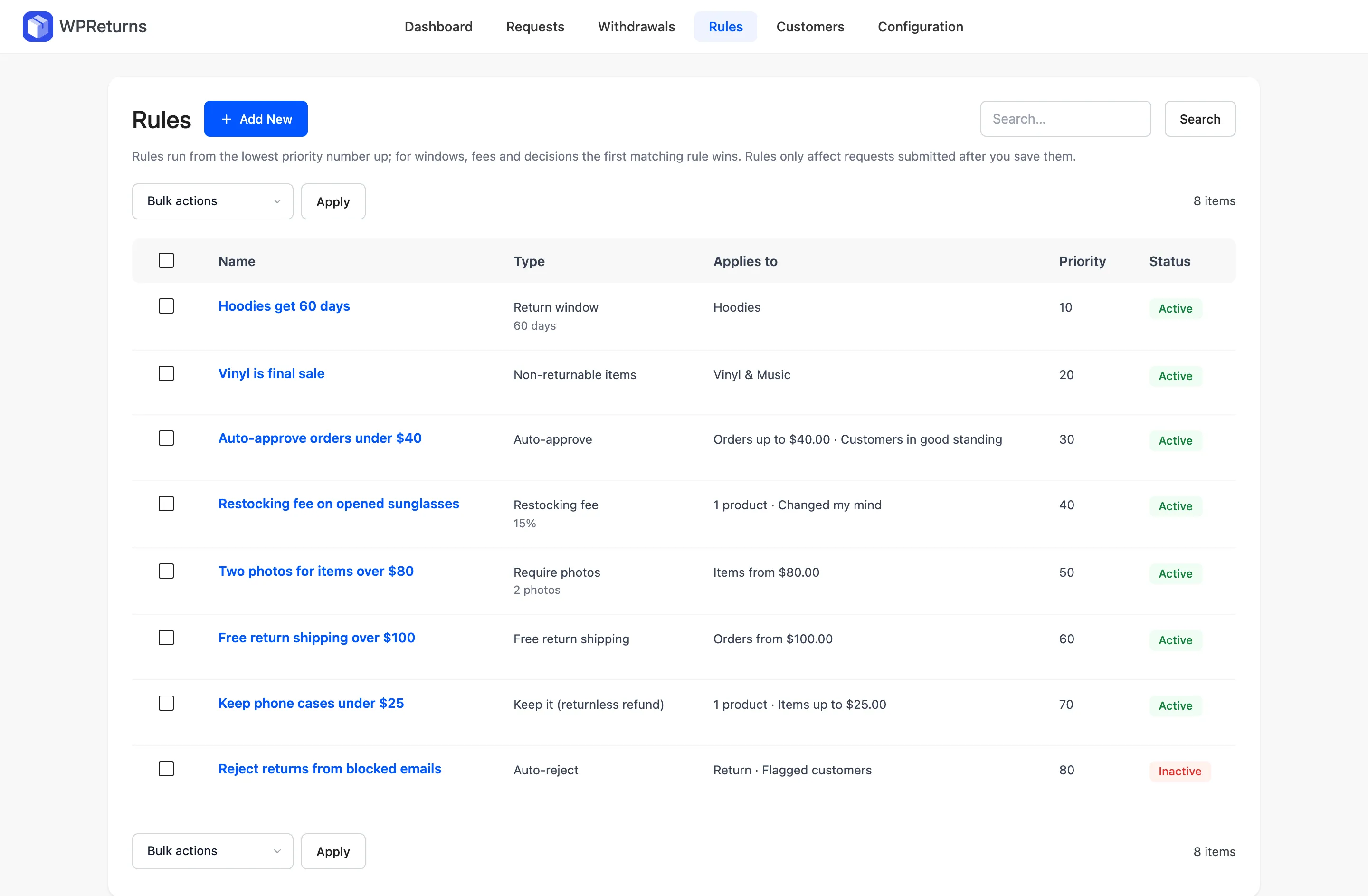
1. Free Return Shipping Above an Order Total
Free return shipping above a threshold rewards bigger baskets. A $75 threshold gives free returns only on orders large enough to carry the cost. Smaller orders keep the normal fee.
In WPReturns Pro this is a Free return shipping rule with an order total condition. Our return rules feature page lists every rule type.
WPReturns > Rules
2. Free for Exchanges and Store Credit
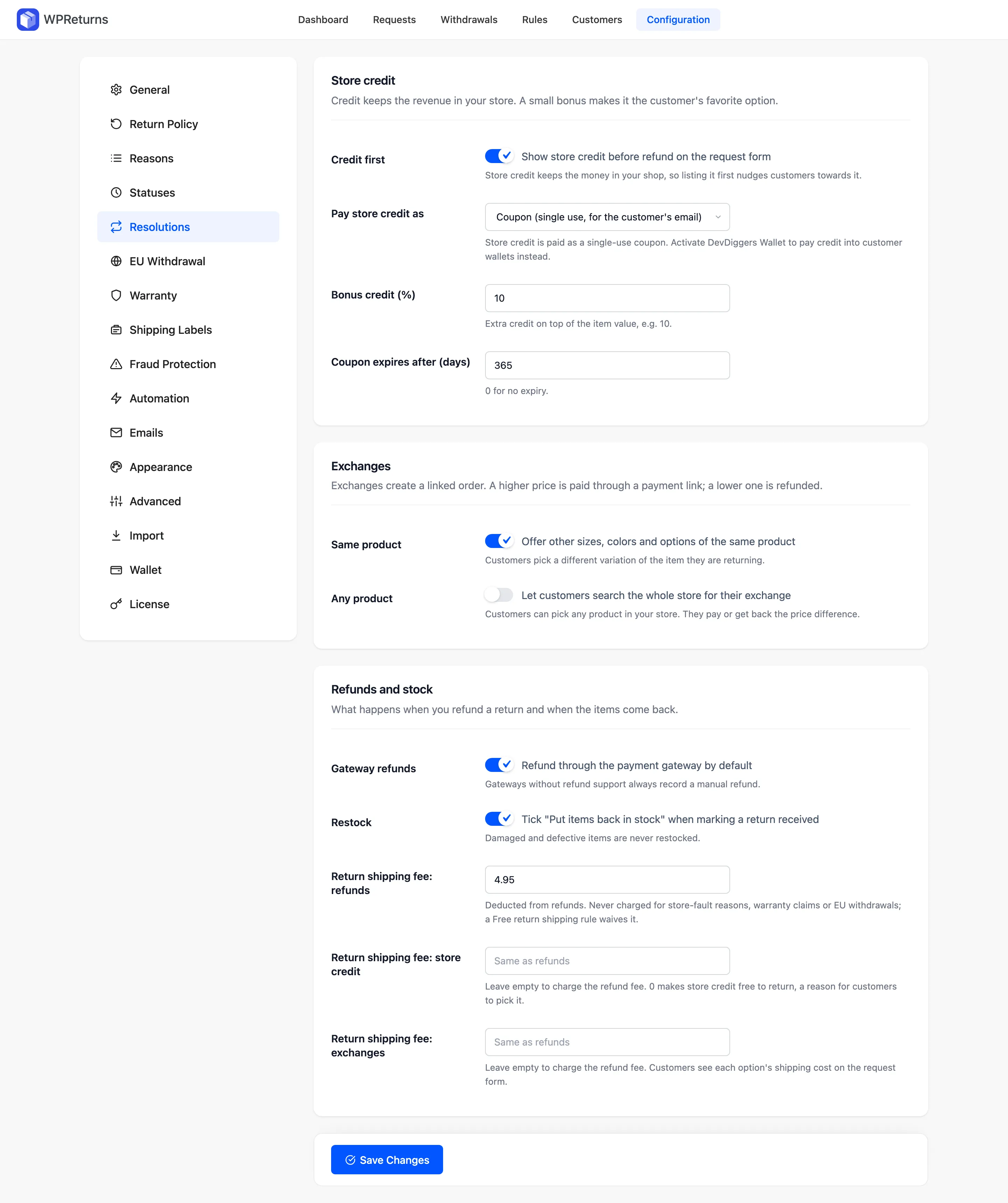
You can make returns free only when the customer takes an exchange or store credit. The money stays in your shop, which makes the label cheaper than a cash refund. Customers still get a free return on the choices that help you.
The Resolutions tab holds a separate return shipping fee for refunds, store credit and exchanges. Enter 0 for store credit to make it free to return. Our store credit vs refund guide compares the two.
WPReturns > Configuration > Resolutions
3. A Flat Return Fee Taken From the Refund
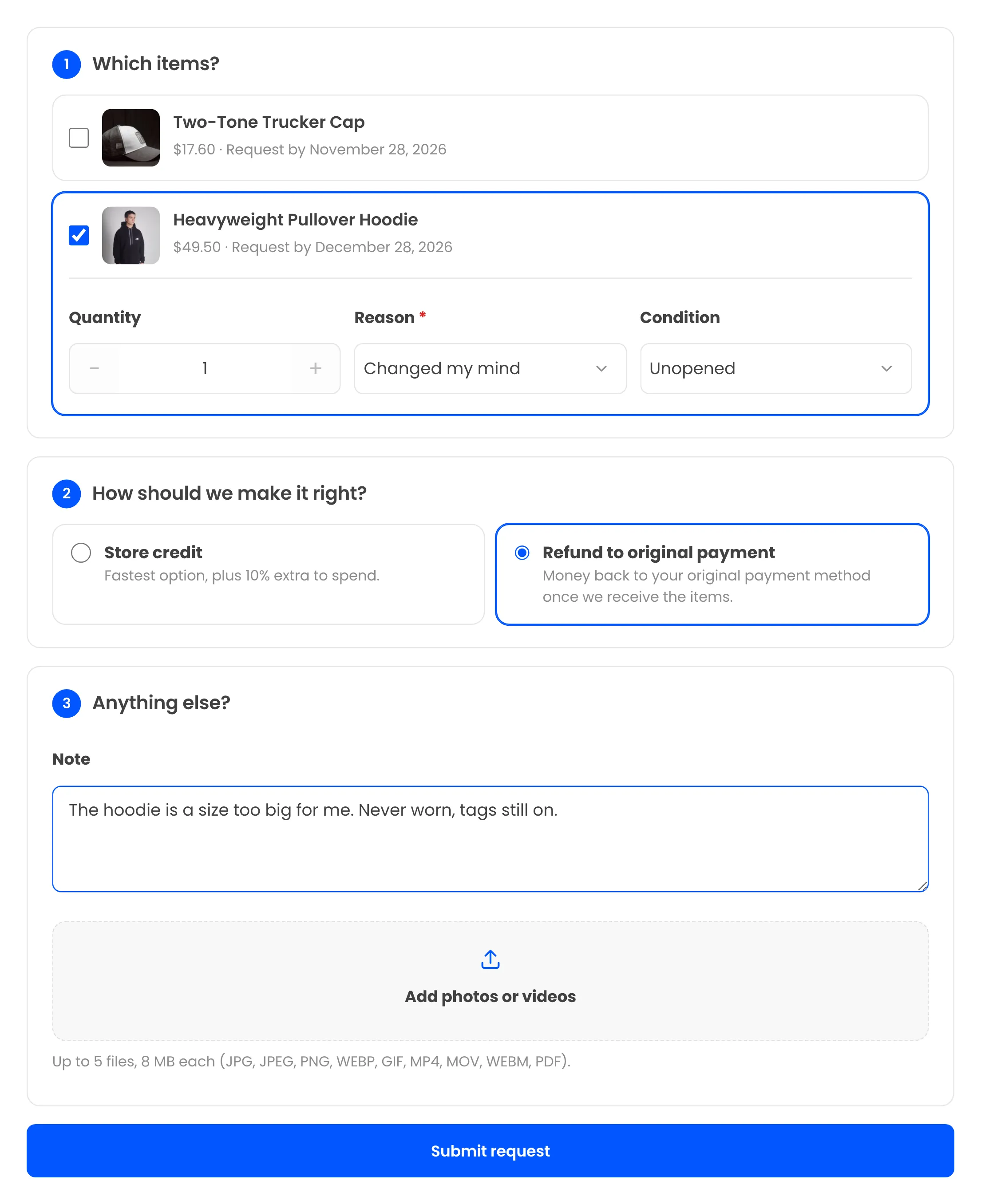
A flat fee deducted from the refund splits the cost with the customer. A $5 fee on a $9 label halves your loss, and shoppers still see a cheap, clear price. The request form shows the fee before they confirm.
WPReturns Pro never charges the fee on a store’s-fault reason, a warranty claim or an EU withdrawal. A restocking fee is a separate charge. See our restocking fee guide.
Customer request form
4. Keep It Refunds for Cheap Items
A keep it refund skips the return altogether. The customer keeps the item and gets the money, and nothing ships. It beats free return shipping on items cheaper than the cost of taking them back.
Run the sum for your own products. Our returnless refund guide explains when it wins and how to limit abuse.
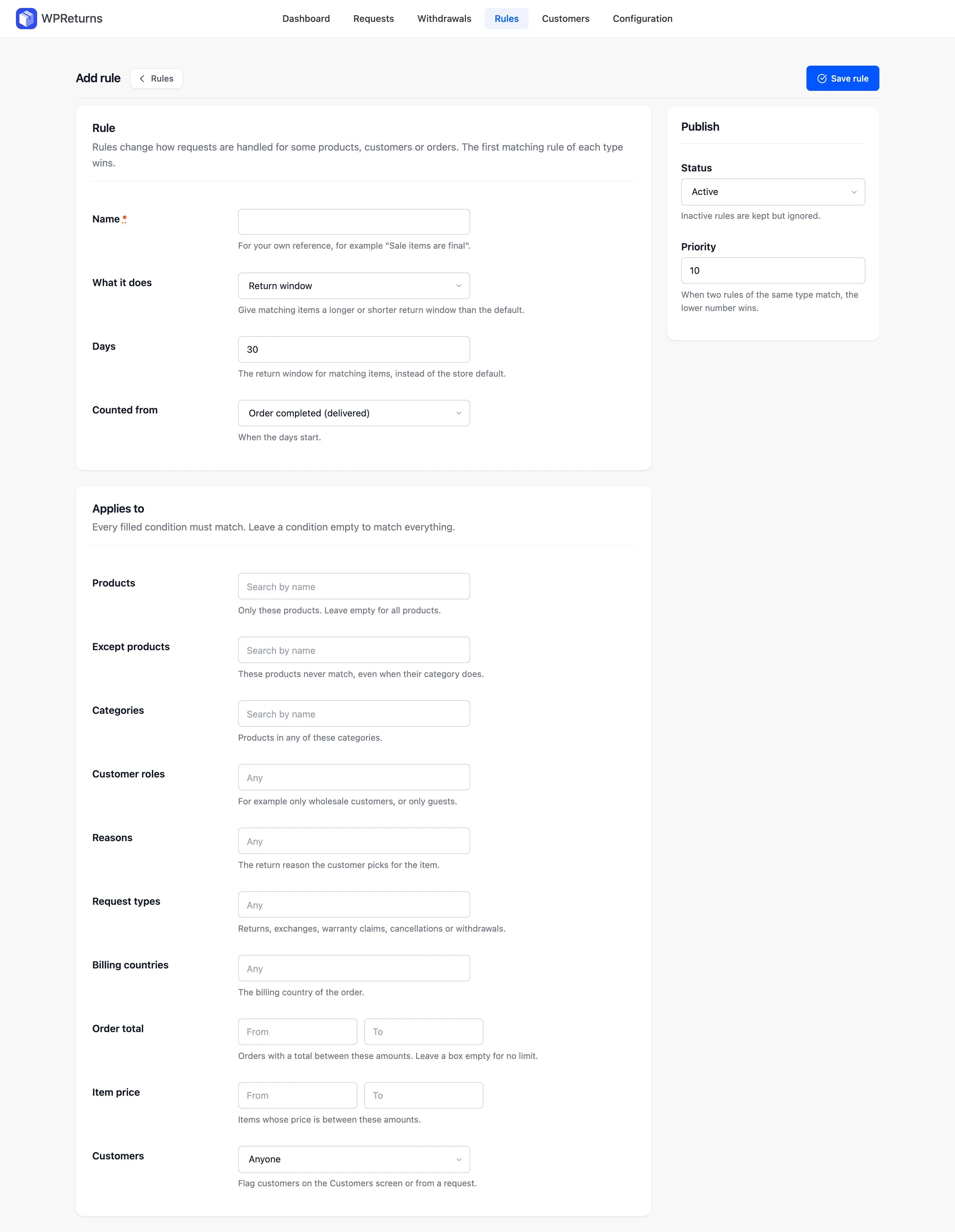
WPReturns > Rules > Add rule
How to Set Up Free Return Shipping in WooCommerce
WooCommerce core has no free return shipping setting, and you decide return by return. A WPReturns Pro rule with an order total condition makes the policy automatic for every request. Setup takes three short steps and needs no code at all.
Refunds themselves are documented in the WooCommerce refund guide. That page covers the order screen and leaves the return policy to you.
The free plugin has one return window and final-sale items. Return shipping fees and rules are Pro features.
How a free return shipping rule reaches the customer
- 01Customer asksReturn request for an orderRequest
- 02Rule matchOrder total meets the conditionCheck
- 03Fee waivedReturn shipping fee drops to zeroRule
- 04LabelCustomer gets a label or sends it backReturn
- 05ResolveRefund or credit with no fee takenResult
Step 1: Add the Free Return Shipping Rule
Go to DevDiggers Plugins > WPReturns > Rules and select Add New. Name it “Free returns on big orders”. Set What it does to Free return shipping.
1WPReturns > Rules > Add rule
Step 2: Set the Order Total Condition
Under Applies to, enter an Order total From value such as 75. Every condition you fill in must match, and an empty one matches everything. Set Status to Active, pick a Priority and publish the rule.
You can also limit it to a category or to customers who are not flagged. See the rules docs for every condition.
2WPReturns > Rules
Step 3: Check the Policy Line and the Request
Go to WPReturns > Configuration > Return Policy. Leave the policy line empty and WPReturns builds it from your settings. It adds “Free return shipping.” only when you use EasyPost or Shippo labels and no fee applies.
Then start a test return as a customer. The request form should show no return shipping fee for an order above your threshold.
3WPReturns > Configuration > Return Policy
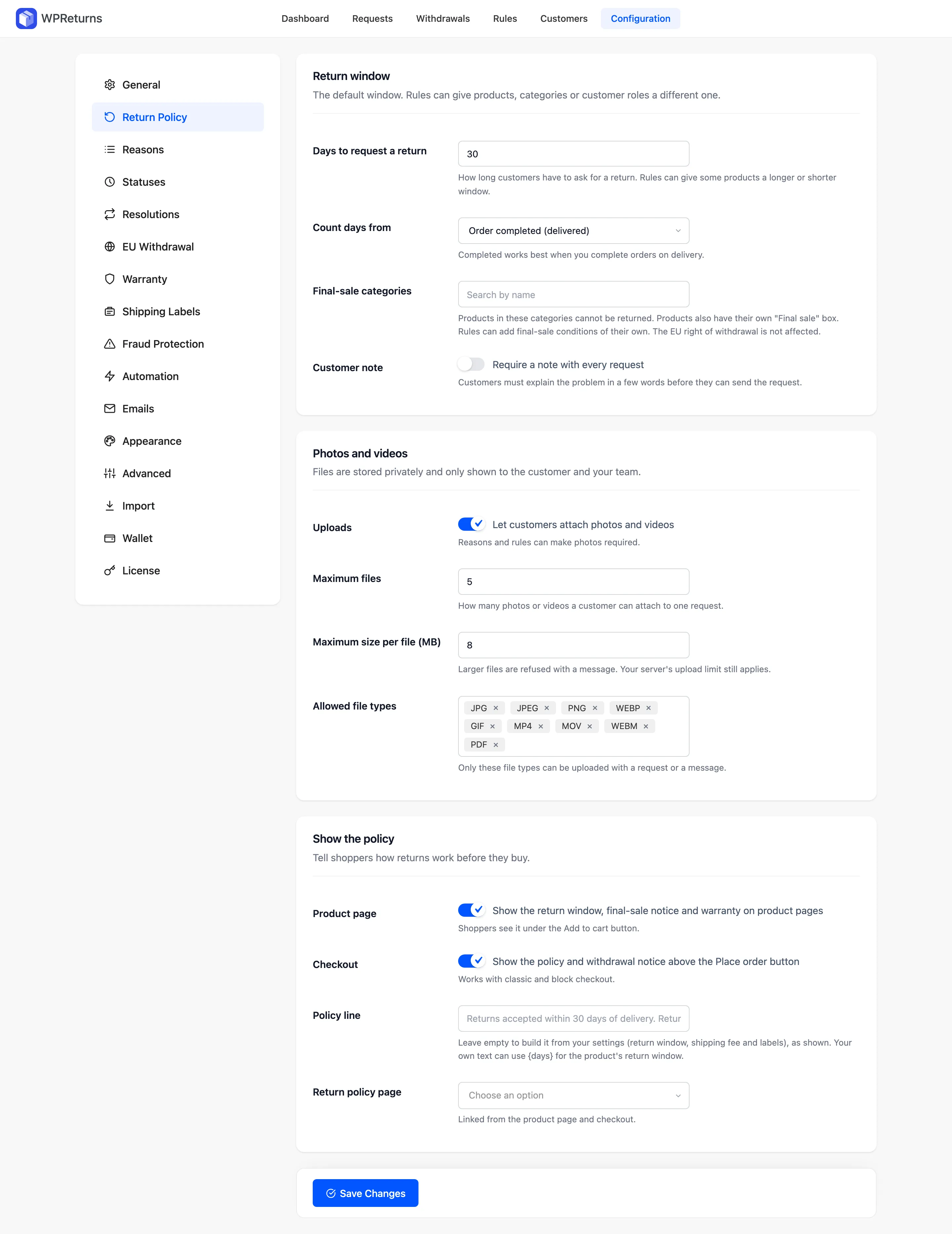
A rule only affects requests submitted after you save it. Open requests keep their old setup. Our return label guide shows how to create the label itself.
When Is Return Shipping Free by Default?
Return shipping is free by default when the store is at fault, on warranty claims and on EU withdrawals in WPReturns Pro. In those cases the store bears the carrier cost, and no free returns rule is needed. Customers see this on the request form.
Store’s-fault reasons include a wrong item or a defective one. The fee is also skipped on an EU withdrawal. Check the consumer rules in your market before you set any fee.
Product page
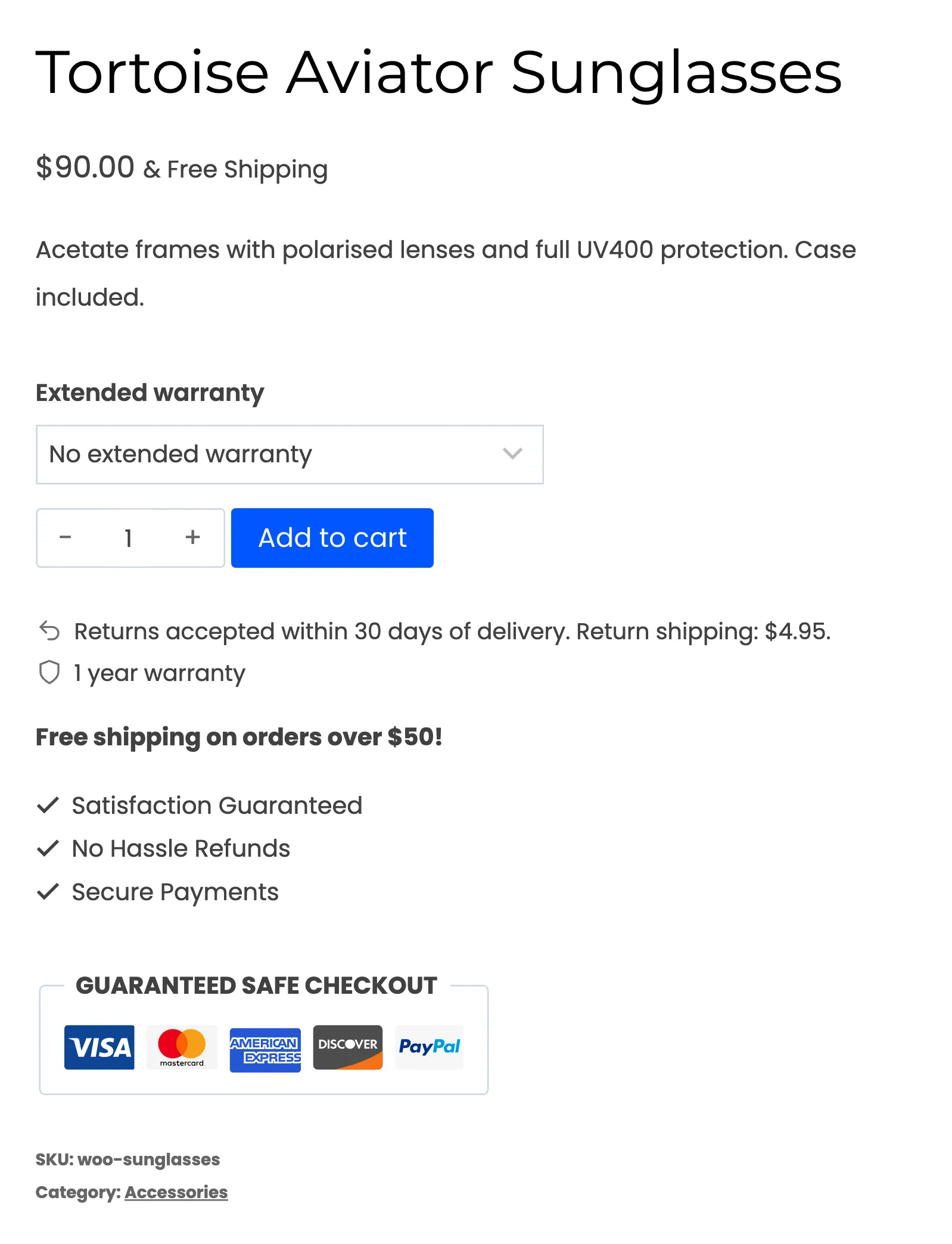
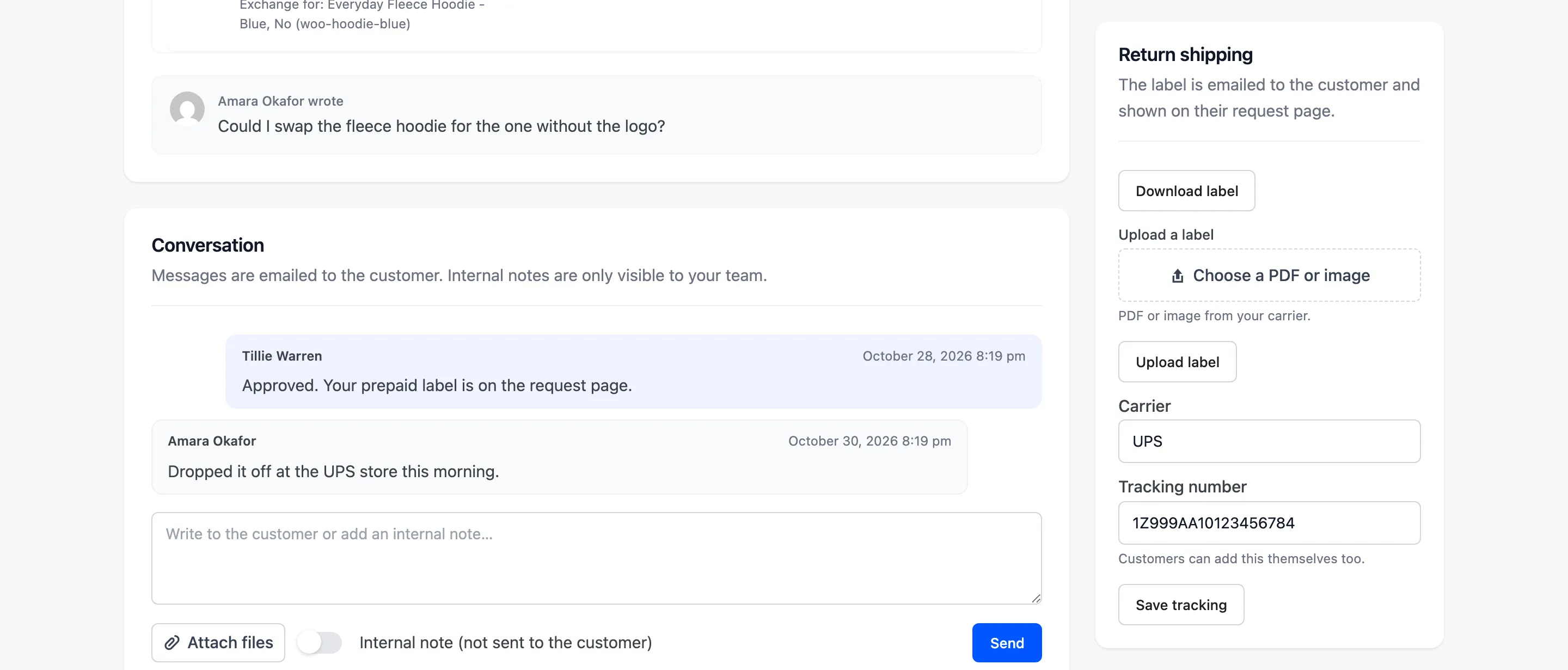
Customers do not have to guess. The request form and the resolved email both show any fee. A free return reads as free from the first click to the last.
The product page states the policy so shoppers see the fee before they buy. A clear fee builds more trust than a hidden one.
WPReturns > Requests > Request
Conclusion
Free returns are a bet on repeat business, paid for with a label on every return. Offer them when your margin and return rate can carry the cost. Otherwise cap them, charge a flat fee or send credit instead of cash.
Start with one cap. A free return shipping rule above an order total is a safe first test.
After a month, compare your return count and label spend. Then widen or tighten the rule.
Build the rule once in WPReturns Pro and every request follows it. See the pricing page for plans.